
The water-in-fuel light is on, or the engine is starving for fuel. Here is what to do.
The water-in-fuel light means the fuel/water separator has collected enough water to need draining, and on some engines, including Detroit's, leaving it leads to a derate. Water gets in through condensation in the tanks or arrives with the fuel. If the engine also stumbles, loses power under load or starts hard, a filter may be clogging. Drain only as your manual describes, somewhere safe.
What the water-in-fuel light is telling you
Diesel passes through a fuel/water separator on its way from the tanks to the engine. Water is heavier than diesel, so it settles to the bottom of the separator, where a drain valve lets it out. A sensor watches that level, and when enough water has collected, the water-in-fuel lamp comes on. Freightliner's driver documentation puts it simply: the indicator tells the driver the fuel may contain water, and any water collected in the separator should be drained.
How urgent it is depends on the engine. Detroit's lamp guide says the separator must be drained or the engine will derate, and Freightliner's manuals note that Detroit engines may start their warning and shutdown process when water is detected in the fuel. Other engine makers handle it differently, so your engine's operator's manual has the final word. Some trucks also carry a separate fuel filter restriction lamp, which Detroit describes as a filter that is restricted and needs service soon.
How water gets into diesel in the first place
No fuel system is sealed off from moisture, and water reaches a tank by more than one route. Donaldson, the filtration manufacturer, describes the main ones, and one of them explains a slime problem that a new filter alone will not solve.
- Condensation inside the tank. Temperature swings make moisture form inside fuel tanks, and humid air can pass moisture into the fuel itself. An emptier tank leaves more air space for that to happen, which is why Freightliner's driver's manuals advise filling the tanks at the end of the day to keep condensation to a minimum.
- Fuel that cools down. Warm diesel can hold more dissolved water than cool diesel. As fuel cools overnight, some of that water drops out as free water and sinks to the bottom of the tank.
- Water that arrived with the fuel. Fuel can already contain water from storage and handling before it ever reaches your tank. A lamp that comes on soon after a fuel stop, on a truck that was fine before it, is worth mentioning when you call.
- Microbial growth. Where free water sits at the bottom of a tank, microbes can grow at the layer where fuel and water meet. Donaldson warns that they produce a slimy sludge that can rapidly block on-engine filters, along with acidic byproducts that corrode tanks. That sludge can be the reason a filter keeps plugging after it has been changed.
Why water and a plugged filter stop a truck
Water does damage on its way through. Donaldson notes that it gives moving parts less of a lubricating cushion than diesel does, that it combines with acids in the fuel to corrode metal, and that corrosion is one of the most common causes of injector problems. That is the reason the separator sits ahead of the engine, and why a lit water-in-fuel lamp deserves attention the same day.
A clogging filter causes a different set of symptoms. Filter makers list a loss of power that shows most under load, an engine that takes longer to crank or needs several attempts to start, and, once the restriction is severe, stalling. Some separators give a visual warning as well: on DAVCO Fuel Pro separators, which Freightliner's maintenance manuals cover, the fuel level climbs the element in the clear cover as it loads, and the manual says to change the element when the fuel reaches the top.
In cold weather the same symptoms can come from diesel that has started to gel in the filter, which is a different cause with an overlapping fix. Our post on gelled fuel and frozen air lines covers that one. An engine that cranks slowly rather than cranking well and failing to catch points to the electrical side instead, and our guide to a semi that will not start walks through the batteries and starter.
Draining the separator the way your manual describes
Draining water from the separator is a routine driver task on many trucks, but separators differ, and Freightliner's maintenance manuals, for example, give separate procedures for different separator brands. Follow the one for your truck. The steps below are drawn from Freightliner's procedure for one common unit and show what a safe drain looks like.
- Choose a safe place first. A truck stop, a lot or a yard, not a live shoulder. If the separator can only be reached from the traffic side or from underneath the truck, leave it for the service truck.
- Engine off, parking brake set, tires chocked. That is the first step in Freightliner's procedure, and it matters on a slope as much as on the flat.
- Let it cool. Some separators are heated by fuel returning from the engine or by engine coolant. Freightliner warns to drain only when the engine and fluids have cooled, because draining a hot separator can cause severe scalding.
- Catch everything. Put a clean container under the drain valve and, where the design allows, attach a hose to direct the flow. Fuel and water belong in the container and then in proper disposal, not on the ground.
- Open, drain, close. Open the drain valve the amount your manual specifies. Some designs need the vent cap removed so the separator drains fully. Close the valve and refit the cap before the engine is started.
- Look at what came out. A small amount of clear water that stops quickly is one thing. Water that keeps coming, dark sludge or slime is another, and the technician will want to know.
- Leave the fuel lines alone. Cummins warns never to crack a high-pressure fuel line with the engine running. Loosening fittings to bleed air is service work, not a roadside experiment.
When the light comes back or the stumble does not go away
If the lamp returns soon after you drain, water is still arriving from the tank, and draining the separator is only treating the symptom. If the engine still stumbles, lacks power or starts badly after a drain, the filter itself may be restricted, or the fuel may be contaminated enough that a fresh filter will not stay clean for long.
Either way, do not keep pulling a load up grades waiting for it to clear. A starving engine can stall somewhere you would never choose to stop, and on some trucks the engine's own protection will cut power first. Our post on derates and limp mode explains what that power cut is and how the fault code decides what happens next. Pick a safe place to stop while the truck still has power, then call.
What the service truck fixes where you are parked
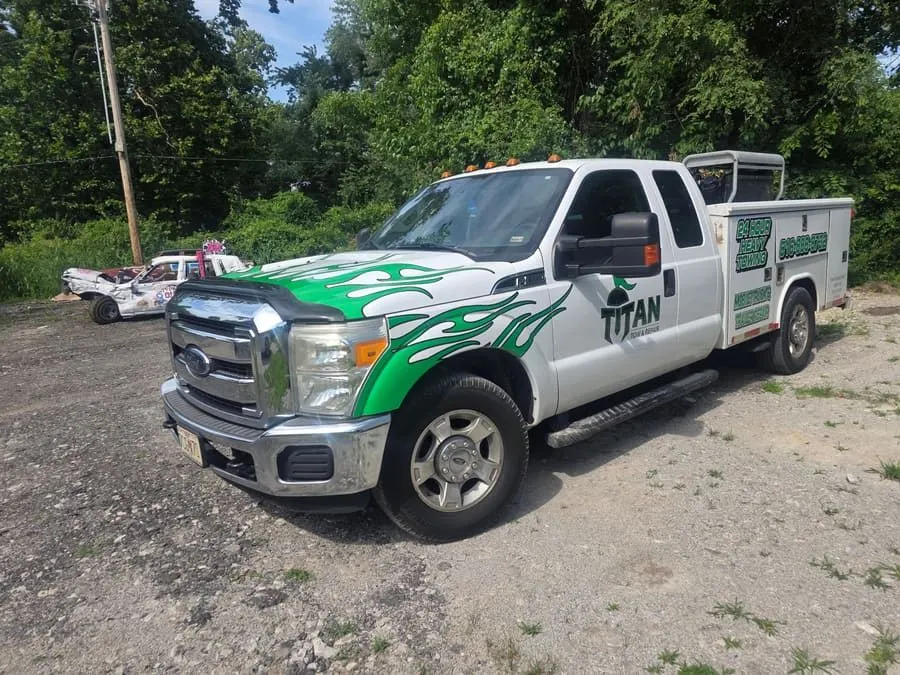
Fuel filter and water separator faults sit squarely in the diesel engine work our mobile truck repair service handles, alongside hard starts, no-starts and derates. The technician reads the fault codes to confirm what the engine has actually logged, drains the separator, and fits fresh filters and separator elements. The system is then primed and worked through until the engine pulls clean fuel, and the codes are cleared once the fault is fixed.
Priming is the step that catches people out, because engines differ. Cummins, for example, has its engine-mounted filter installed dry and filled by the priming pump when the key is cycled, and warns against pouring fuel into the clean side of a new filter. The DAVCO procedure instead fills the housing with clean fuel and purges air with the engine running. Getting that wrong can leave air in the system, which is one reason a filter change is better left to someone with the procedure for your engine.
Where roadside work stops
Some contamination problems are bigger than a filter change, and we will say so rather than fit filters that will plug again. Draining or cleaning a contaminated tank and removing and disposing of contaminated fuel are specialist jobs. Injector and high-pressure fuel pump work is shop work. If water or sludge has already reached the injection system, the truck belongs in a shop that can test and repair it.
When the engine will not run well enough to move safely, or the tank itself is the problem, the answer is a tow to the shop or yard of your choice. We will tell you which way it is likely to go once we know what the lamps say, what came out of the drain and how the engine is behaving.
Details worth having before you call
- The engine. Make, model and engine, because separators, filters and priming procedures differ between them.
- The lamps and messages. Water-in-fuel, check engine, a fuel filter lamp if your truck has one, and any code or message on the display, word for word.
- What the engine is doing. Stumbling, losing power under load, starting hard, stalling, or running normally with only the lamp on.
- Whether you drained it. How much came out, what it looked like, and whether the lamp came back.
- Your last fuel stop. When and where you last fueled, in case the fuel itself is the source.
- Where you are. Highway, direction and mile marker, and whether you are safely off the road. On a shoulder, hazard flashers and triangles come first; our post on where the warning triangles go covers placement.
Related reading
Battery Light On: Semi Alternator Not Charging — A battery warning light with a falling voltmeter means the batteries are being drained instead of charged.
Semi Coolant Leak: Hose, Radiator or Water Pump? — Most semi coolant leaks come from hoses, clamps, the radiator or the water pump, and those are commonly repaired at the roadside.
Tractor ABS Light vs Trailer ABS Light: What Each Means — An ABS warning light means the anti-lock system has found a fault and may not prevent wheel lockup on the affected vehicle.
What this covers
Mobile truck repair
Our service truck carries the parts and the tools. Faster for your driver, cheaper for your office, and the load keeps moving.
Mobile truck repair detailsIn a specific city: Diesel mechanic and mobile semi truck repair in Kansas City, Missouri · Mobile truck and trailer repair in Riverside, Missouri · Mobile truck and trailer repair in Liberty, Missouri · Mobile semi truck and trailer repair in Saint Joseph, Missouri · Mobile truck repair and a diesel mechanic on call in Topeka, Kansas